
Choice


Yes - this old conundrum! At the risk of dragging you down the convoluted and somewhat murky lanes of my thought processes I would like to give you some idea of why I have alighted on this particular topic. As usual, this will be a path of moving from the particular to the general and although there are of course dangers in that way it is the way in which we tend to experience and think about the world. There will be many interesting diversions which may or may not be taken (at this point in the temporal scheme of things I haven’t written what you are about to read) and therein lies one of the elements of the conundrum I mentioned.
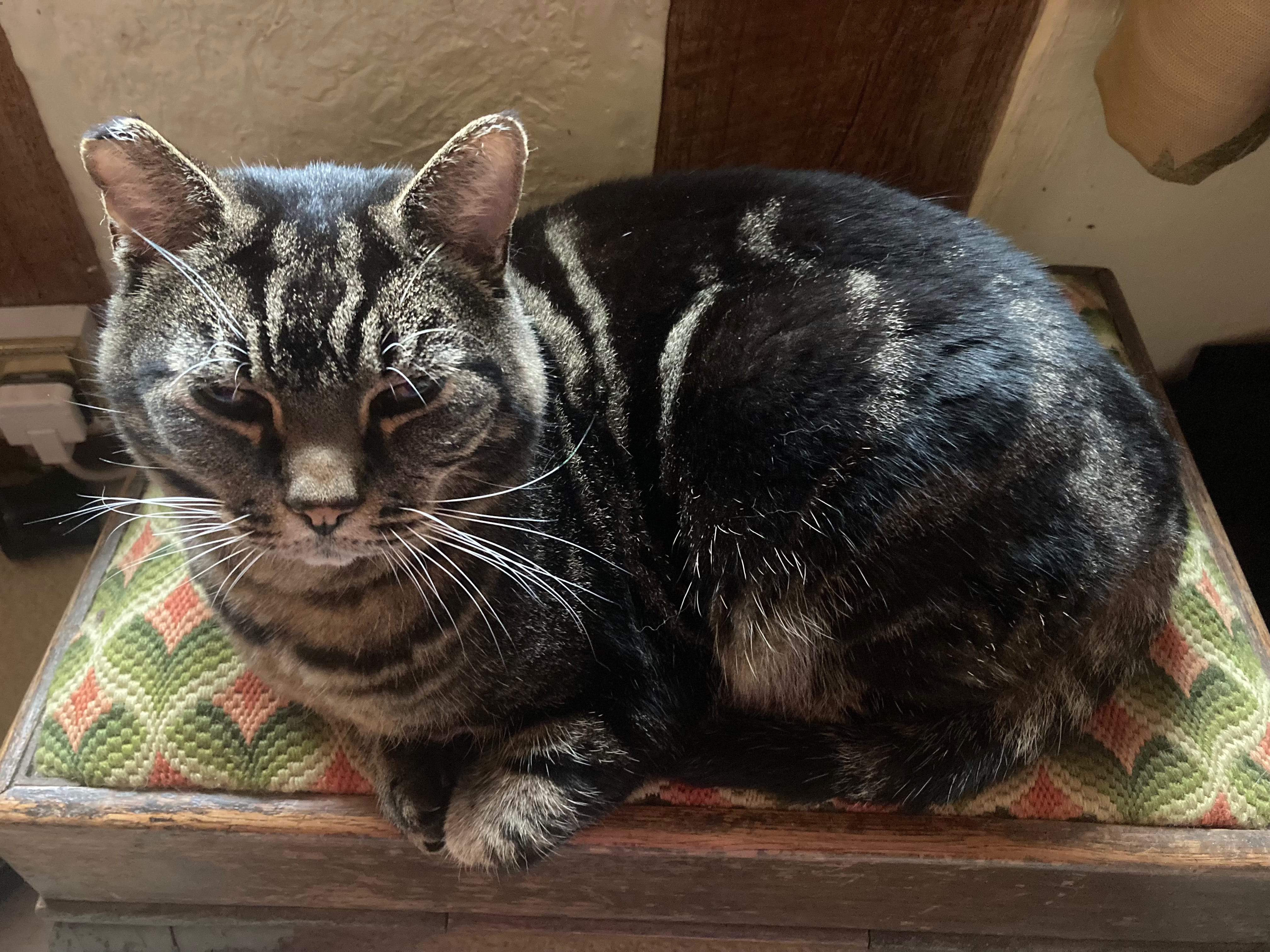
Let me first back up a bit and tell you about the domestic drama that set me off on this train of thought. We have a cat (and a dog!) who has recently developed a vestibular problem - his sense of directions is compromised by a problem with his inner ear. His second visit to the vet prompted the discussion, this being a condition that we would be unlikely to improve through treatment, about whether we should put him down. The vet said that they would support this decision if we wanted to go ahead.
Apart from a strong tendency to look and circle to the left he is otherwise apparently unaffected and does not show distress. Ah, but animals don’t always show their distress, I hear you say and I believe that to be the case. On the other hand, things which would cause you and I significant distress like losing a limb or an eye or having a large lump under your skin are things which animals by and large seem to able to live with quite easily.
The problem is that we are faced, as it were, with playing God with our animals’ lives when we have anything but God-like powers of perception to make such a judgment. This does assume that you believe that God does in fact make such decisions in the first place which I very much doubt. In fact, it is completely central to what I will be writing further down the page, when I’ve worked that out, that he doesn’t and that the world we have is to all intents and purposes entirely a result of what we humans have decided across the millennia.
It’s not just animals lives, though, that we interfere with. We have made a point of developing numerous disciplines to investigate, dissect and treat ailments with the view to prolonging our own lives and removing causes of pain or malfunction. Many would say: what’s wrong with that? Have you not yourself benefitted from such treatment - and indeed I have. Broken bones fixed (as an adult), removal of teeth and a sewing needle from my toe ( 6yrs old), various injuries sewn up and a hernia repaired (quite recently). I am not advocating for ceasing all health related research and development - far from it. I am very grateful for the interventions of the Health Service throughout my life. I am wanting, however, to move away from the binary of it’s all good or all bad and more fruitfully explore the pathways of the decision making processes that lead to the manner in which we treat our populations.
We are touching on parts of previous posts, here, but through a rather different lens. This is the lens of choice. Before diving in to the health context I would like to explore the nature of choice a little as it has quite a bearing on how we have arrived at not just what I would argue is a dysfunctional health system but a general and widespread dysfunctionality in nearly every sphere of life.
Like many things which appear relative simple on the surface, the idea of choice is many-layered. At the surface level it could be seen as a binary thing: at its simplest you have a choice between, say, 2 toothbrushes, one red and one green. You want a toothbrush and in all other respects they are same so as you prefer (say) red you choose the red one. Simplicity is not however a hallmark of our world so it is much more likely that not only will the toothbrushes differ in colour but also in shape, the arrangement of bristles and their stiffness and the ergonomics of the handle or head or junction of the two. Some may have a tongue scrape on the back of the head. Some may be more ecologically minded, made with bamboo or also having replaceable heads and, boy, will they differ in cost! Choice is good but as Iain McGilchrist is wont to point out, more is not necessarily better. There is an optimal number of choices which we regularly exceed in defiance of this view.
The door analogy is a well-worn one in this area but no less appropriate, even so. My particular take is it is like being in a room with a number of doors, any one of which will take you into a further room of doors and so on. The room you walk into next is the result of your choice and displays the consequences of it. In the end you only want one toothbrush and, like choosing a path, in choosing to go a particular way you close the door - if only temporarily - on the other paths. The temporary bit is the rub.
First, some things cannot be undone, or at least not in the short term. So, while you may be able to go back and try a different door the landscape will have changed. Choices that undermine trust are an example of this as are choices to express yourself offensively destroying relationships and the choices to physically destroy our environment.
Second, the very act of returning to a choice point, however altered or not the field of choice is, requires an openness of mind; an ability to admit mistakes and seek forgiveness. I have seen this in the personal lives of those around me but rarely witnessed it at places of work or in public institutions. As a consequence, choices are circumscribed by reason of shame, rigidity, habit, profit and political manoeuvring, amongst others and as a result our public and commercial life has squeezed the vitality out of those bodies and reduced us, the bearers of the consequences, to no more than a number.
Moving on from tooth brushes, when we consider more weighty topics such as our health system politics is the primary driver of improvements. Understandably, given the high levels of poverty and sickness, there was in the early twentieth century some feeling that even the poor could do with some support to improve health - a view given more urgency after the First World War. The first ministry of health was set up in 1919 and upgraded to deal the Second World War with the express desire to coordinate services to improve health. This increasing concern with the nation’s health culminated in the National Health Service in 1948. There was little need to justify these developments as reducing disease and building a healthier population were self-evidently good objectives so it was at the time easier to see this as a binary decision. We do it or we don’t and we did.
There was in previous decades some recognition that health outcomes were closely linked to how we managed societal needs. The Victorians saw that open sewers were a source of infection and disease and invested huge amounts into building underground sewers. In 1906 free school meals were first introduced and an ambitious council house building scheme was begun after WW1 with millions experiencing indoor bathrooms, and electric light for the first time. The great Smogs were seen as a product of burning so much coal in densely populated areas and smokeless fuels were developed to reduce this real threat to lung health.
We seem to have lost this root cause analysis approach and substituted a more shallow appreciation of what has caused the rise of problems and even come to ignore the cause altogether. In medicine, there seems little discussion about how diseases come about and a much greater emphasis on producing drugs to counter the symptoms. There can be no argument that medicine has been captured by the pharmacological industry and I have no doubt that many medical practitioners rue this development. With the demise of the role of expert advice and the rise of business consultants and lobbyists how can we hope that governments will make choices that primarily benefit the people they govern?
Binary choices are generally quite easy. Red or green toothbrush, ill health or good health. But in an increasingly complex world the choices are more nuanced and more difficult as competing interests vie for preference and in the realm of the political we inevitably come to politics with a big ‘P’ and the interests of parties in their electability and the ubiquitous role of capital. While I don’t want to dwell on these well-worn topics it is almost - perhaps completely - impossible not to pass through this territory in thinking about the application of our power of choice.
The deification of profit and growth has seen this focus become the most important consideration in recent decades in choosing between options. The private finance contracts of the ’80’s to build hospitals and other infrastructure are an example of this as is the more recent award of building and managing the NHS’s data systems to Palantir, the Trump-aligned tech business that supplies much of the hardware and software to power the US military. While there are nominal safeguards in place to protect the NHS data the value of that data is such that even an only moderately sceptical person would view the risk of Palantir succumbing to the temptation to use it for their own purposes as very high.
Enough with the politics, though, as I am in the end more interested in what the effect is on the world of health and us as the products of the health system.
As per the above, the default position is primarily to consider doors marked ‘profitable’ but given that inevitability what other designations have narrowed the choice further? In health terms, ‘longevity’ would be up there with a few others like technical innovation, AI and efficiency. This being the case, it is not hard to see the next step to transhumanism but for the majority of us life expectancy has been the top line of the health agenda and death has been, as far as is possible, swept under the carpet.
I would probably be being kind to describe our societal relationship to death as ambivalent. All through my lifetime in the second half of the twentieth century life expectancy has increased decade on decade and led us to expect an ever-increasing number. Added to this, the laser-like focus on eradicating disease, rebuilding parts of us that have been severed to restore function and delving into the very building blocks of our corporeal existence to alter rogue genes have all promoted the idea that dying is bad. We must live! At all costs?
What about quality of life? Unfortunately, while considered on a case by case basis with patients this is not a door that politicians favour when deciding how to invest in the system as a whole. They generally prefer numbers that demonstrate objective progress - life expectancy ages, numbers treated, profits made, GDP increased - all measures that give an illusion of improvement but do little actually to improve people’s experience of their own lives.
Any fixation on a particular preference is likely to lead to rejecting choices that would have had a more beneficial outcome and in this example favouring long life over the quality of life has led to the unedifying spectacle of so many of our older citizens languishing in underfunded homes that run on the goodwill of the staff, enduring their extended days on a diet of multiple medications while the mind is steadily deteriorating.
Much hand-wringing has been in evidence over this as the boomer hump passes through the system and we wonder how to deal with an ageing population leaving a reducing working age group to pay for the ever-increasing burden of care. We could have made different choices.
We could have banned the production of some of the hundreds and thousands of chemicals that leak into our atmosphere and pollute the air with carcinogens, heavy metals, and other poisons that are likely to cause and exacerbate dementia, lead to infertility and a host of other effects that reduce our quality of life.
We could have made unhealthy food options such as ultra processed food products or those with high salt and fat content more expensive than healthy options.
We could have protected our young people from the algorithms that feed them commercialism, violence and pornography and the normalising of suicide.
We could have done a lot of things that would have enormously increased the quality of life of all our citizens had we had that aim at the forefront of our political discourse. And once we did.
What’s more, we could again. Even though we are far down the path of narrow choices each room we find ourselves in has a door to lead us back to a different paradigm. The door marked quality of life is always there - we just need to choose it. The longer we leave it the further down the road we will be to a future of the inhuman but given that life is journey rather than a destination it would still be a refreshing change whenever we make it to be travelling in the direction of appreciating our humanity.
Oh - and about our cat. No decision yet. This is a much more difficult choice than with our previous pets who have all been put to sleep owing to medical problems. In truth it bothers me that none of our pets have made it to a natural death, but that’s another story.
This article really made me pause, especially your insight about how we've traded quality of life for longevity in healthcare.
It's rare to read something that balances frustration with hope for change. Thank you for sharing.